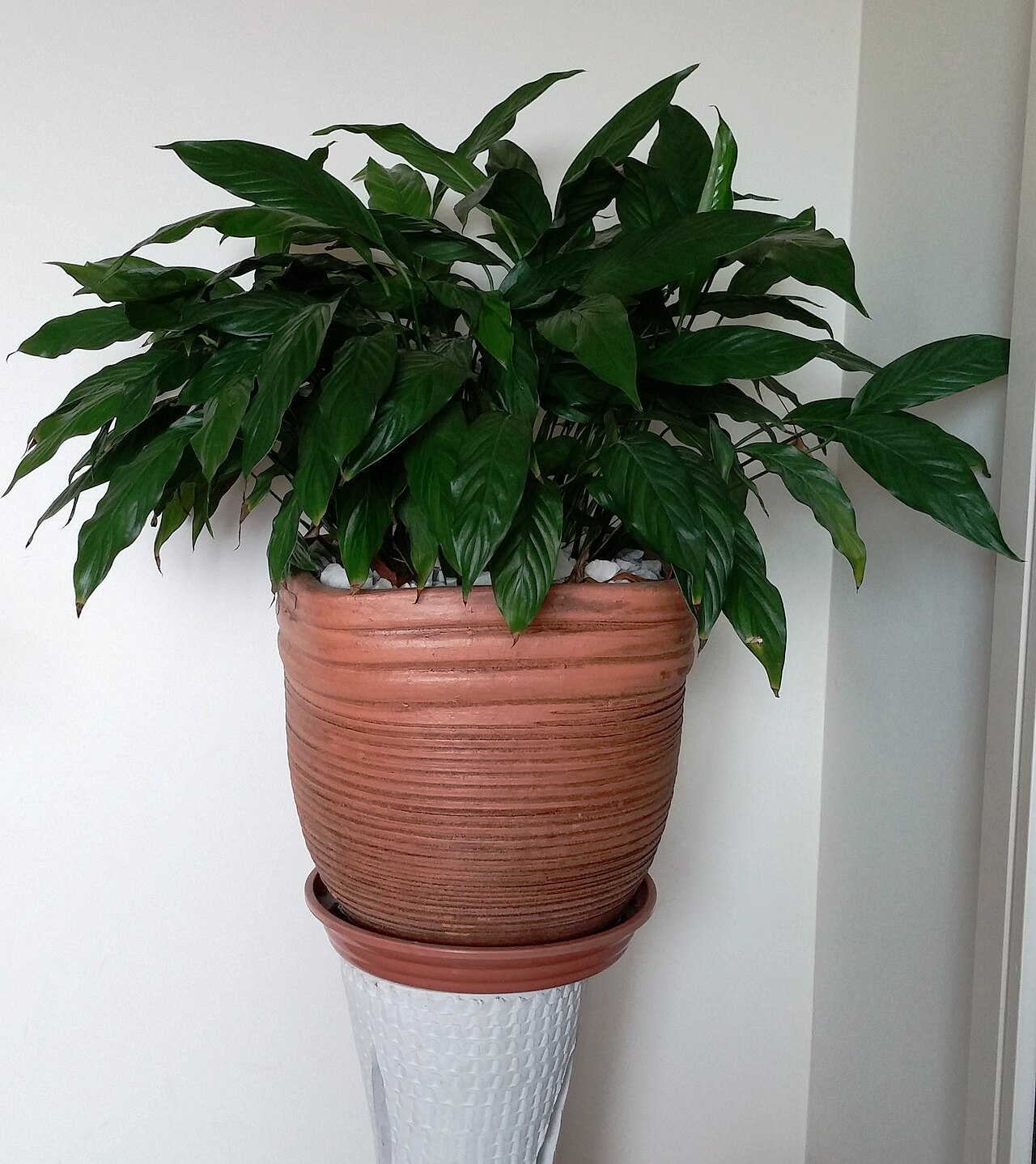
What is a peace lily?
The peace lily (Spathiphyllum wallisii) is a shade-loving tropical from the arum family, grown for its glossy dark leaves and elegant white “flowers” (actually a modified leaf called a spathe). It’s popular for offices and low-light rooms because it tolerates shade — and because it’s unusually expressive about its needs.
Why is my peace lily drooping?
This is the peace lily’s defining trait: when the soil dries out, the whole plant wilts dramatically — then perks back up within hours of watering. It’s the most direct “water me” signal in the houseplant world. Just don’t use it as your only cue; letting it wilt hard every time slowly stresses the plant.
How much light does a peace lily need and will it flower?
Peace lilies tolerate low light but flower best in medium to bright indirect light. In a dim corner you’ll get healthy leaves but few or no blooms. If yours has stopped flowering, the fix is almost always more (indirect) light.
How often should you water a peace lily?
Roughly every 5–7 days, keeping the soil lightly and evenly moist — more than a succulent, less than a bog plant. They also love humidity, so a bathroom or a spot near other plants suits them well.
Why does my peace lily get brown leaf tips?
Brown tips usually come from tap-water minerals (chlorine and fluoride), low humidity, or over-fertilizing. Switch to filtered or distilled water, raise humidity a little, and go easy on feeding.
Is a peace lily toxic to pets?
Yes — the ASPCA lists peace lily as toxic to cats and dogs. Note this is different from true lilies (Lilium), which are far more dangerous to cats; peace lily causes oral irritation, drooling, and trouble swallowing from insoluble calcium oxalates.