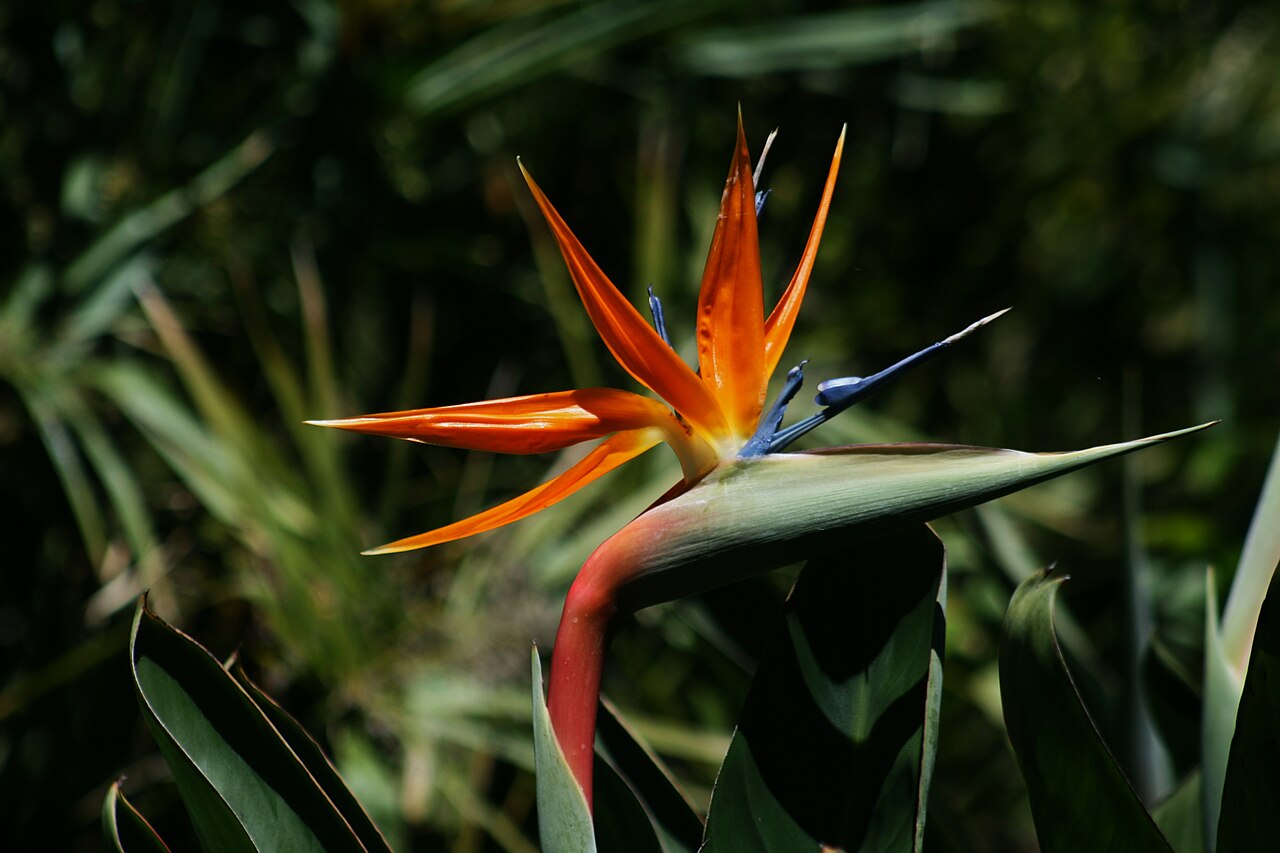
What is a bird of paradise?
The bird of paradise (Strelitzia reginae) is a dramatic tropical plant grown for its large, paddle-shaped leaves and, in the right conditions, its unmistakable orange-and-blue flowers that resemble a crane’s head. Indoors it makes a big architectural statement and can reach 4–6 feet.
How much light does a bird of paradise need?
A lot. This is a full-sun lover — give it the brightest spot in your home, ideally with several hours of direct sun. Light is the single biggest factor in whether it will flower indoors. In a dim corner it survives but stays leafy and bloomless.
How often should you water a bird of paradise?
Water about weekly, keeping the soil evenly moist in the growing season and letting the top inch dry first. It’s a thirsty plant in bright light and warmth, but still rots if left waterlogged, so make sure the pot drains.
Why won’t my bird of paradise flower indoors?
Two reasons: light and age. Plants usually need to be several years old and getting very bright light (including direct sun) before they bloom. Many indoor plants never flower simply because they don’t get enough light — it’s the first thing to fix.
Is bird of paradise toxic to pets?
Yes — the ASPCA lists Strelitzia reginae as toxic to cats and dogs, with GI irritants concentrated in the fruit and seeds. (Don’t confuse it with Caesalpinia/Poinciana gilliesii, a different plant that shares the name and is more toxic.)