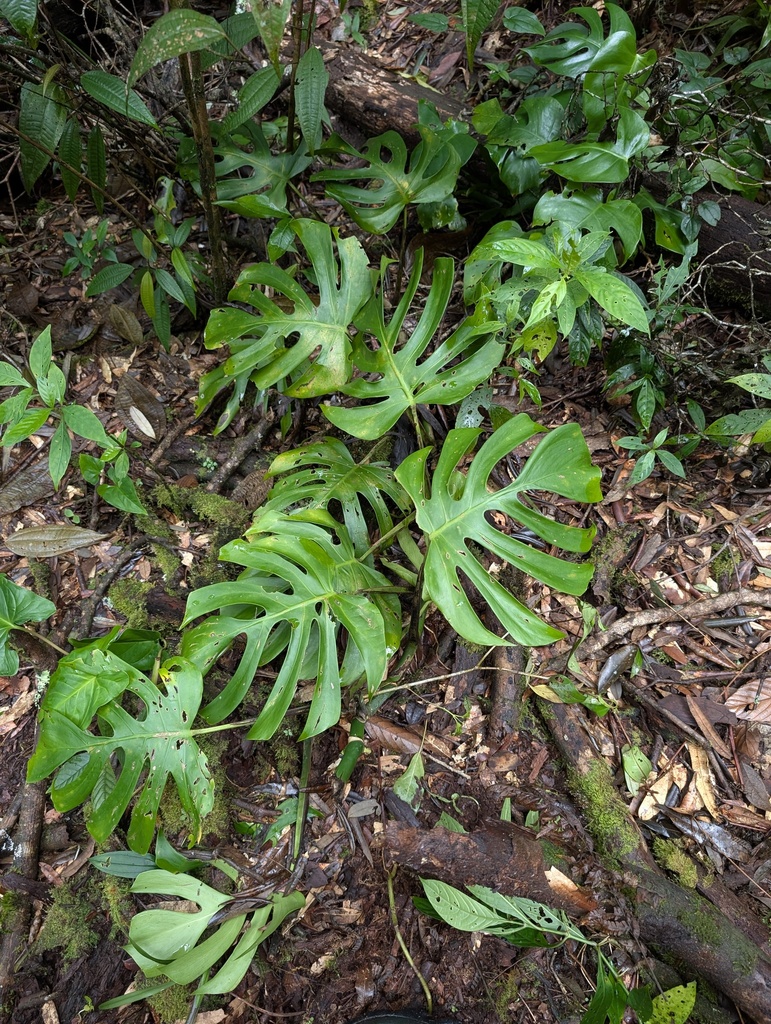
What is a Monstera deliciosa?
The Monstera deliciosa — the original “Swiss cheese plant” — is a climbing tropical aroid from the rainforests of Central America. In the wild it scrambles up tree trunks, and its huge leaves develop the famous splits and holes (fenestrations) as they mature. Indoors it’s fast, dramatic, and remarkably easy, which is why it became the houseplant of the decade.
Why doesn’t my Monstera have splits (fenestrations)?
This is the most common Monstera question. Young plants and plants in low light produce solid, heart-shaped leaves. Fenestration develops with maturity + bright, indirect light + something to climb. Move it brighter, add a moss pole, and new leaves will start to split.
How much light does a Monstera need?
Bright, indirect light is the sweet spot — an east or a few feet back from a south/west window. It tolerates medium light but grows slower and stays less split. Avoid harsh direct midday sun, which can scorch the leaves.
How often should you water a Monstera?
Water about every 1–2 weeks, letting the top 1–2 inches of soil dry out first. They like a chunky, airy aroid mix (bark + perlite) and a pot that drains freely. Yellow leaves almost always mean it’s staying too wet.
Should I give my Monstera a moss pole?
Not strictly required, but recommended. Climbing mimics its natural habit and pushes the plant to make bigger, more fenestrated leaves. Without support it will still grow, but tends to sprawl and stay smaller-leaved.
Is Monstera toxic to pets?
Yes — the ASPCA lists Monstera deliciosa as toxic to cats and dogs. The insoluble calcium oxalates can cause mouth irritation, drooling, and vomiting if a pet chews the leaves.