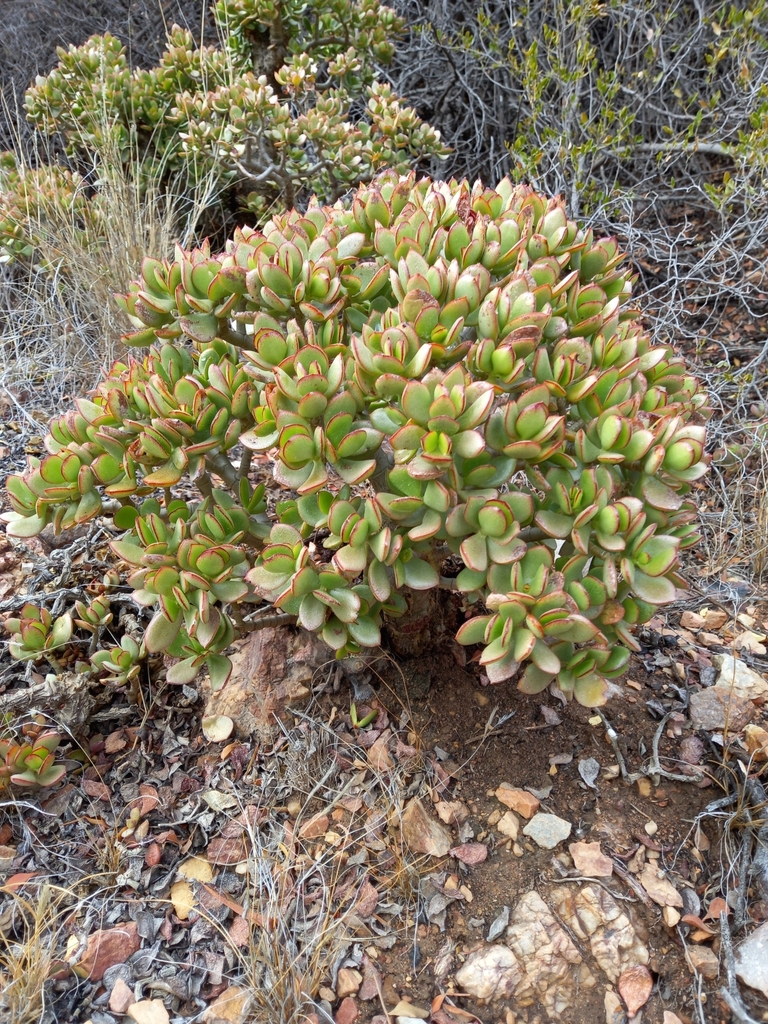
What is a jade plant?
The jade plant (Crassula ovata) is a tree-like succulent from South Africa with thick, glossy, coin-shaped leaves. It’s slow-growing, extremely long-lived (decades, even passed down between generations), and stores water in its leaves and trunk — which makes it one of the most drought-tolerant, forgiving plants you can grow indoors.
How much light does a jade plant need?
Lots. Jade wants at least 4–6 hours of bright light, ideally some direct sun from a south- or west-facing window. This is the single biggest factor in keeping it compact: too little light and it stretches into weak, leggy growth.
How often should you water a jade plant?
Water only every 2–3 weeks in the growing season, and let the soil dry out completely first. In winter the plant goes semi-dormant — cut watering back to roughly once a month. Like all succulents, jade is far more likely to die from overwatering than from drought.
Why is my jade plant dropping or shriveling leaves?
Shriveled, wrinkled leaves mean it’s thirsty — give it a good soak. Mushy, translucent leaves mean the opposite: overwatering and rot, which needs immediate drying out. Use the symptom checker above to match what you’re seeing.
How do you propagate a jade plant?
Jade is one of the easiest plants to propagate. Take a healthy leaf or stem cutting, let the cut end callous over for a few days, then set it on or just into dry succulent mix. Water lightly once roots form. Patience is the only hard part — it’s slow.
Is jade plant toxic to pets?
Yes — the ASPCA lists jade plant as toxic to cats and dogs. Ingestion can cause vomiting, lethargy, and loss of coordination, so keep it away from curious pets.