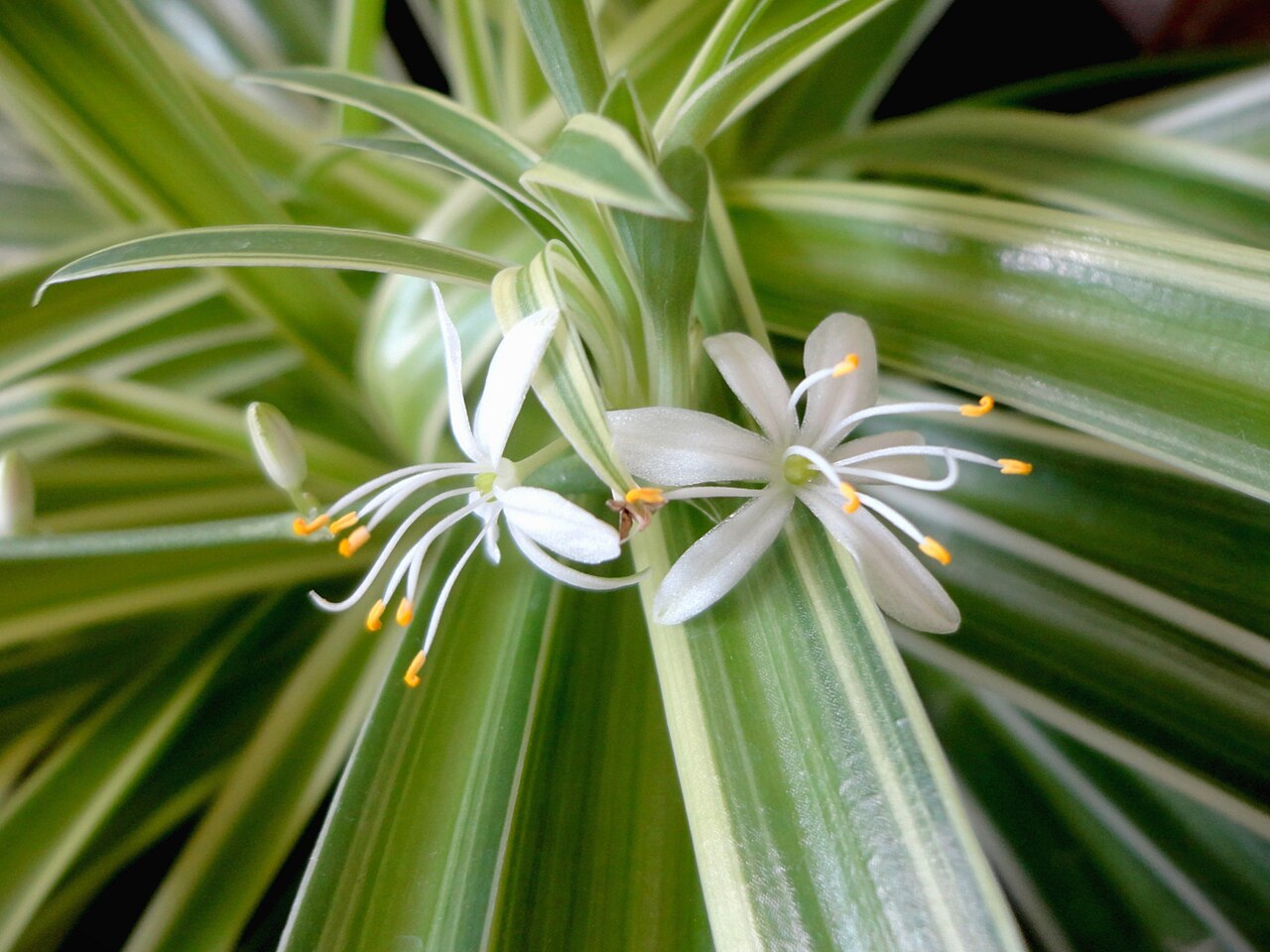
What is a spider plant?
The spider plant (Chlorophytum comosum) is a fast-growing, grassy houseplant famous for the arching “spiderettes” — baby plantlets — it dangles on long stems. It’s tough, forgiving, adapts to a wide range of light, and is one of the easiest plants to propagate and share, which is why it’s been a windowsill staple for generations.
Are spider plants safe for cats and dogs?
Yes. The ASPCA lists the spider plant as non-toxic to both cats and dogs — one of the few popular houseplants that is genuinely pet-safe. Cats are often fascinated by the dangling plantlets and may bat or nibble at them; that’s harmless, though eating a lot of any plant can cause mild stomach upset.
How much light does a spider plant need?
Spider plants are adaptable. They tolerate lower light but grow fastest, stay most variegated, and produce the most plantlets in bright, indirect light. Keep them out of harsh direct sun, which scorches and bleaches the leaves.
How often should you water a spider plant?
Water about once a week, keeping the soil lightly moist in the growing season and a little drier in winter. Their thick, tuberous roots store water, so they handle the occasional missed watering far better than a forgotten fern.
Why does my spider plant have brown tips?
This is the spider plant’s signature complaint, and it’s almost always tap-water minerals — fluoride, chlorine, and salts, which spider plants are unusually sensitive to. Switch to filtered, distilled, or rainwater, flush the soil occasionally to clear built-up salts, and trim the brown tips for appearance.
How do you propagate spider plant babies?
Spider plants are one of the most rewarding plants to propagate. The plantlets (spiderettes) can be pinned onto moist soil while still attached to the mother plant until they root, then snipped free — or cut off and rooted directly in water or soil. One plant quickly becomes many.