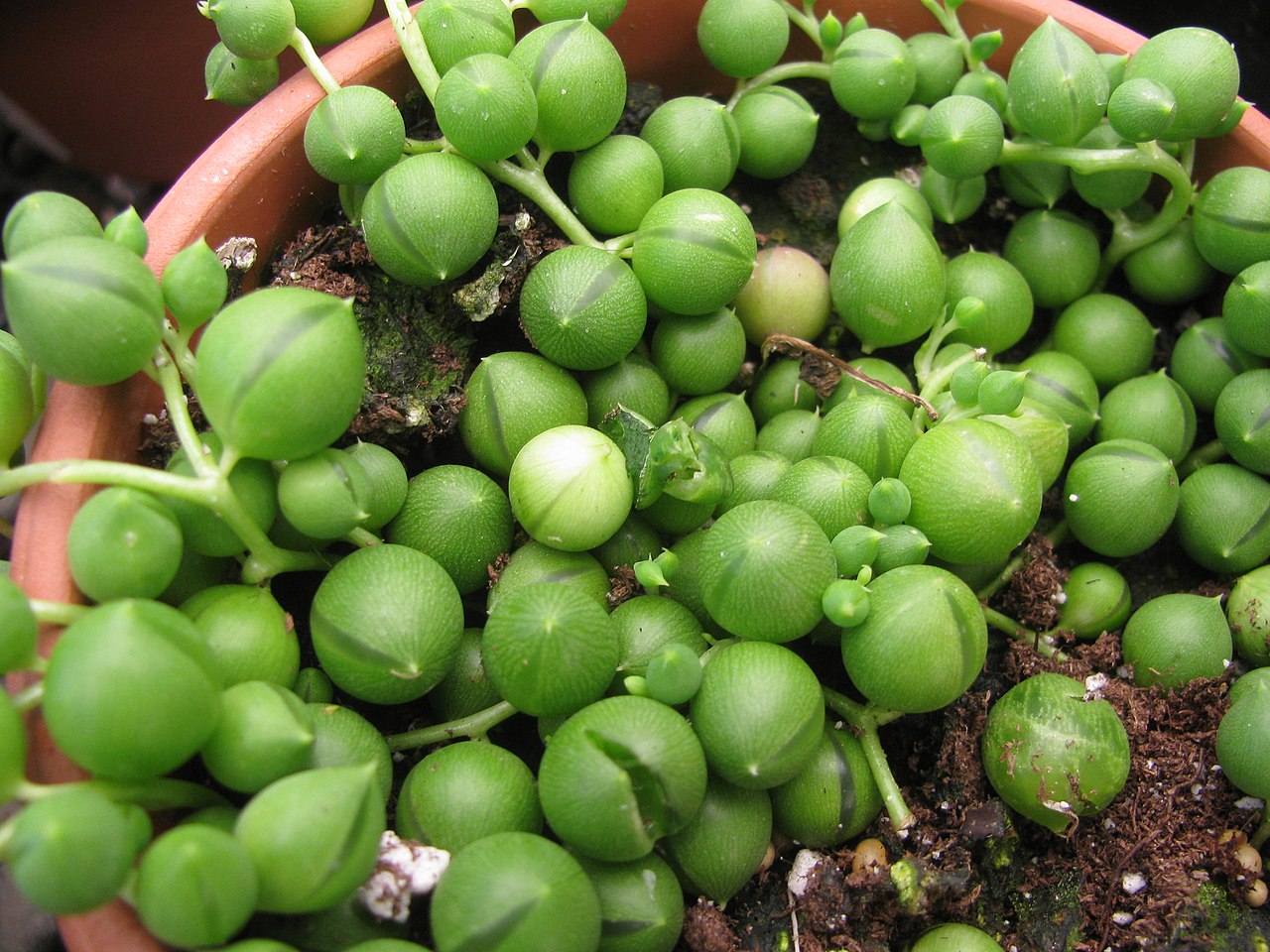
What is string of pearls?
String of pearls (Curio rowleyanus, formerly Senecio rowleyanus) is a trailing succulent from the arid regions of South Africa. Its common name is immediately obvious — the round, pea-like leaves look exactly like a strand of green pearls threaded along slender stems. In its natural habitat it grows along the ground, with stems rooting as they sprawl; in a hanging planter indoors, those stems cascade elegantly over the edge, sometimes trailing two to three feet. It is one of the most visually striking succulents you can grow, but it is not forgiving of overwatering.
Is string of pearls toxic to pets?
Yes. String of pearls belongs to the Senecio family (now reclassified as Curio) and contains pyrrolizidine alkaloids, which the ASPCA lists as toxic to cats and dogs. Ingestion can cause vomiting, lethargy, and in large quantities, liver damage. Keep this plant on high shelves or in rooms your pets cannot access.
How much light does string of pearls need?
String of pearls needs several hours of bright, indirect light per day — a south-facing window with a sheer curtain or an east-facing window is ideal. Insufficient light is immediately visible: the beads deflate and lose their perfect spherical shape, and stems stretch and elongate (etiolation) as the plant reaches for light. A grow light works well in lower-light apartments.
How often should you water string of pearls?
Less often than you think. Water every 14–18 days during active growth, allowing the soil to dry out completely between each watering. In winter, when growth slows, reduce watering further — once a month or less. The beads themselves are a built-in moisture gauge: when they look very slightly less plump and firm, it is time to water.
What does overwatering look like — and how do you fix it?
Overwatering is by far the most common cause of failure with string of pearls. The first sign is mushy, translucent beads, usually starting at soil level and moving upward. If caught early:
- Stop watering entirely.
- Remove any soft, mushy stems.
- Check the roots — trim any brown, rotten roots.
- Let the soil dry out completely, or repot into fresh, fast-draining succulent mix.
Avoid heavy, moisture-retentive potting mixes. This plant needs coarse, gritty soil and a pot with drainage holes.
When does string of pearls grow and rest?
String of pearls grows actively in the warmer months and slows in winter, when you should cut back on water and stop feeding. It can also pause during extreme summer heat — in a very hot spell, water a little less and shade it from scorching direct sun. Resume normal watering and the occasional diluted feed once active growth picks back up.