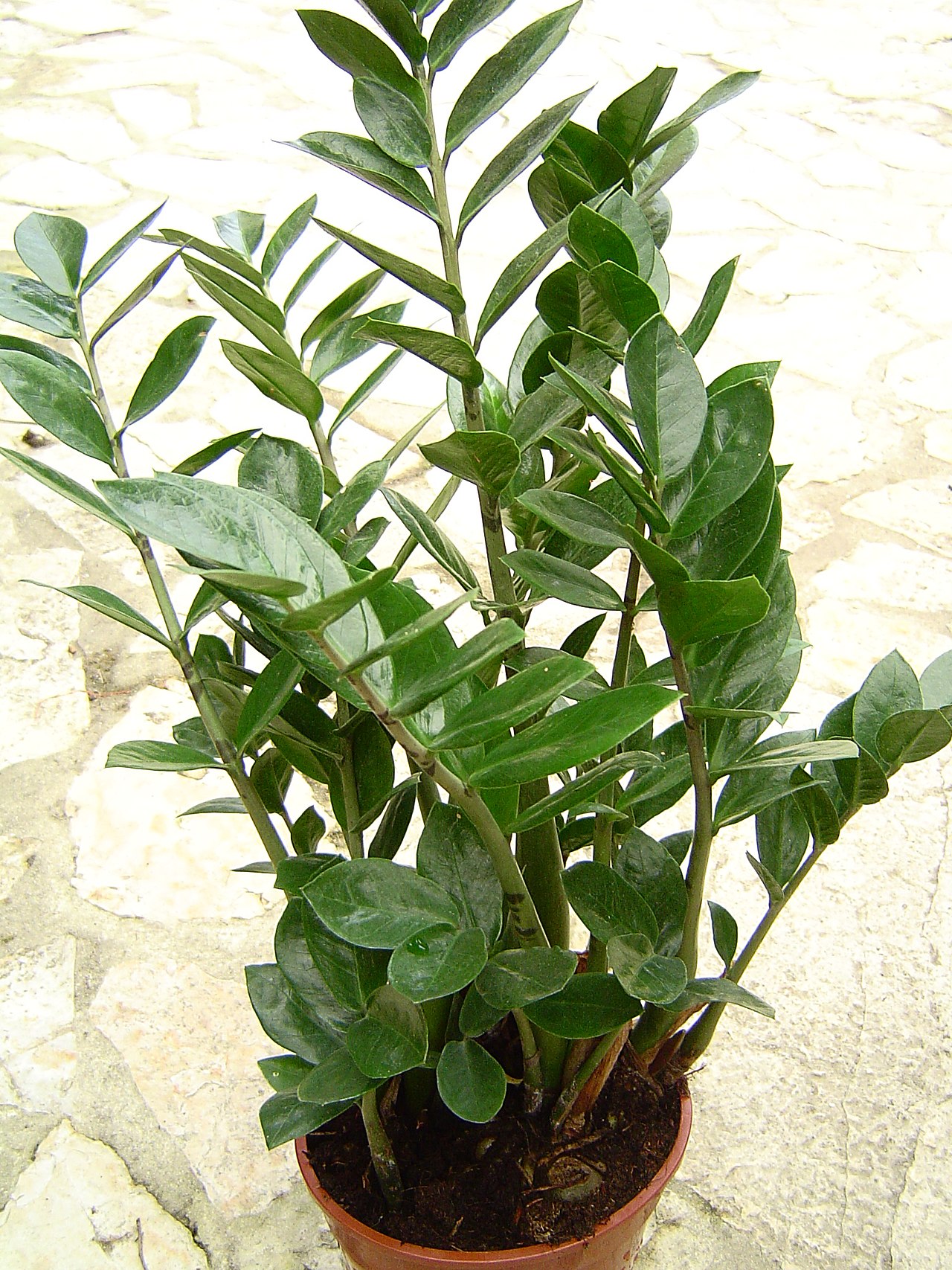
What is a ZZ plant?
The ZZ plant (Zamioculcas zamiifolia) is a glossy, dark-green aroid with thick, waxy leaflets that looks almost artificial. It’s prized as nearly indestructible — it shrugs off low light, dry air, and weeks of neglect, storing water in fat underground rhizomes like a camel.
Can a ZZ plant really grow in low light?
Yes. The ZZ is one of the best low-light houseplants there is, famous for surviving in offices and dim corners with little natural light. It grows faster and fuller in bright, indirect light, but it tolerates shade better than almost any other plant. Avoid harsh direct sun.
How often should you water a ZZ plant?
Rarely — every 2–3 weeks, and less in winter. The underground rhizomes store water, so the ZZ is built for drought and dies almost exclusively from overwatering. Let the soil dry out completely each time; when you’re unsure, wait another week.
Why is my ZZ plant turning yellow or mushy?
Overwatering, essentially always. Yellowing leaves and soft, drooping stems mean the rhizomes are sitting too wet and starting to rot. Let it dry out fully, check the rhizomes, remove any soft ones, and water far less often.
Is a ZZ plant toxic to pets?
Yes — ZZ plants contain insoluble calcium oxalates that can cause oral irritation, drooling, and vomiting if a pet chews the leaves. It isn’t listed individually in the ASPCA database, but its toxicity is well documented by university extension and horticulture sources, so keep it out of reach of determined nibblers.